Previous Next

TESTING

1.2L and 1.8L Engines

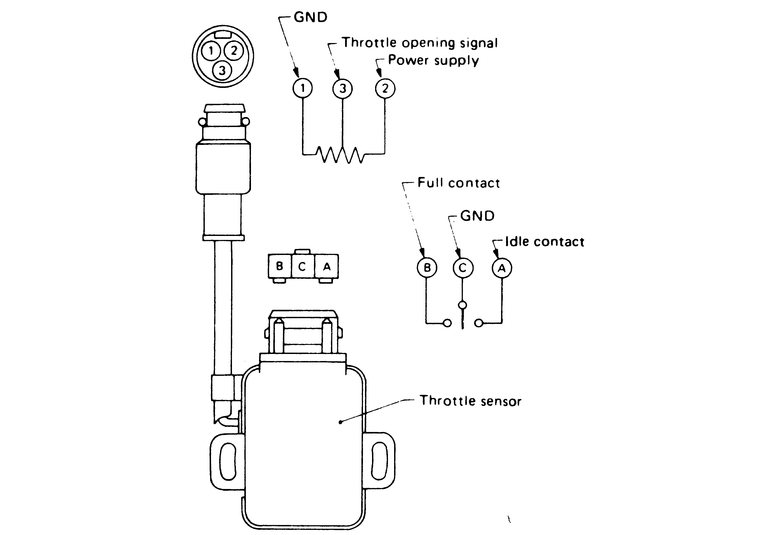
Fig. 1: Throttle sensor testing — 1.2L and 1.8L engines

  1. Insert a feeler gauge between the stopper screw of the throttle body and the stopper, and check for continuity between the following terminals:
  2. Check that there is continuity between the terminals when the throttle is fully closed.
  3. Check that there is continuity between the terminals when a 0.0217 in. (0.55mm) feeler gauge is inserted between the throttle body screw and the stopper.
  4. Check that there is no continuity between the terminals when a 0.0362 in. (0.92mm) feeler gauge is inserted between the throttle body screw and the stopper.
  5. If not within specifications, loosen the screws securing the throttle switch and adjust until all specifications are met.
  6. Measure the resistance between the sensor signal and ground on the throttle sensor connector terminals as follows:
  7. Resistance should be 6–18 kilo-ohms. If not, replace the throttle opening sensor.
  8. Measure the resistance between the throttle sensor terminals 1 and 3. Resistance should be 5.8–17.8 kilo-ohms when the throttle valve is fully closed and 1.5–5.1 kilo-ohms when the throttle valve is fully open.
  9. Ensure that the resistance changes smoothly between the fully closed and fully open positions. If resistance is not within specifications, replace the sensor.
  10. Start the engine and allow it to reach normal operating temperature. Check the idle speed.
  11. Under a non-loaded state, turn the throttle lever by hand to increase engine rpm until the end of the dashpot comes off the throttle cam.
  12. Gradually return the throttle lever, then check engine rpm when the throttle cam contacts the end of the dashpot. Engine rpm should be 2800–3400.
  13. If rpm is not as specified, loosen the dashpot locknut, then turn the dashpot until engine rpm is within specification. Tighten the locknut.
  14. After adjustment, rev the engine to ensure that the idle speed returns correctly as the throttle is released.
2.2L and 2.5L Engines

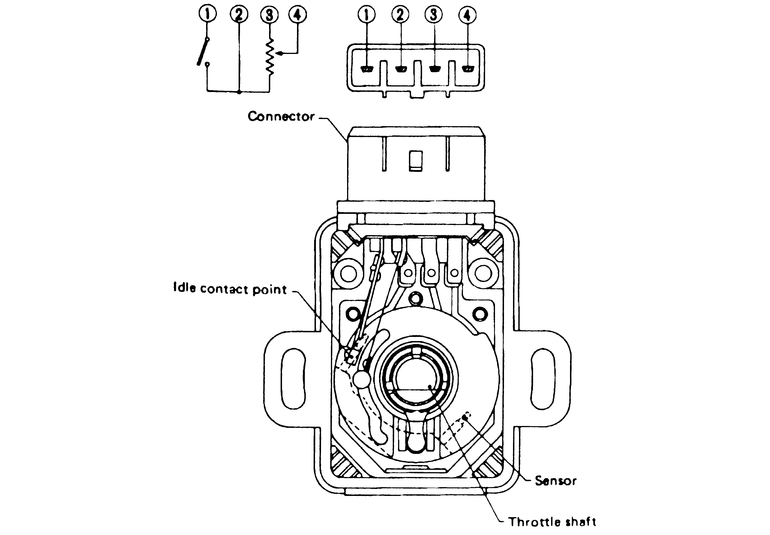
Fig. 2: Throttle sensor testing — 2.2L and 2.5L engines

  1. Turn the ignition switch ON.
  2. Measure the voltage between the ECU connector terminal and ground. Voltage should be as follows:
  3. Ensure that voltage smoothly decreases in response to throttle opening. If measurements are not within specification, check and repair the ECU terminals or harness.
  4. Disconnect the harness from the throttle sensor. Measure the resistance between throttle sensor terminals 2 and 3. Resistance should be 12 kilo-ohms.
  5. Measure the resistance between terminals while slowly opening the throttle valve from the closed position. Resistance should be as follows:
  6. Ensure resistance smoothly increases in response to throttle opening. If measurements are not within specification, replace the throttle sensor.
  7. Detach connectors from the ECU and throttle sensor.
  8. Measure resistance between the ECU connector and throttle sensor connectors. Resistance should be as follows:
  9. Measure resistance between the throttle sensor connectors and ground. Resistance should be as follows:
  10. If resistance is not within specification, check and repair the harness or connector.
2.7L Engine

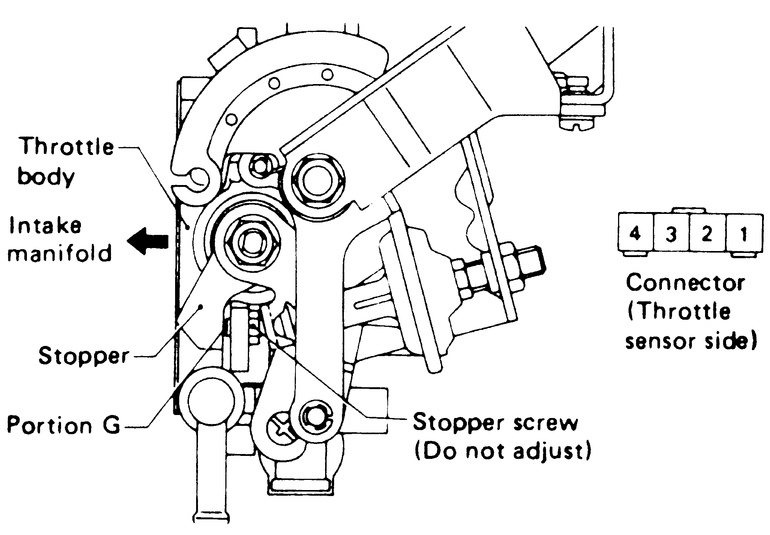
Fig. 3: Throttle sensor testing — 2.7L engine

  1. Disconnect the throttle sensor connector.
  2. Insert a feeler gauge between the stopper screw of the throttle body and the stopper, and check for continuity between terminals 4 and 3.
  3. Check that there is 5 a maximum of kilo-ohms resistance between the terminals when a 0.0138 in. (0.35mm) feeler gauge is inserted between the throttle body screw and the stopper.
  4. Check that there is 1 mega-ohm resistance minimum between the terminals when a 0.0295 in. (0.75mm) feeler gauge is inserted between the throttle body screw and the stopper.
  5. If not within specifications, loosen the screws securing the throttle switch and adjust until all specifications are met.
  6. Measure the resistance between terminals 1 and 4. Resistance should be 3–7 kilo-ohms.
  7. Measure the resistance between terminals 2 and 4. Resistance should be 2 kilo-ohms.
  8. Ensure that the resistance changes smoothly between the fully closed and fully open positions. If resistance is not within specifications, replace the sensor.
3.3L Engine

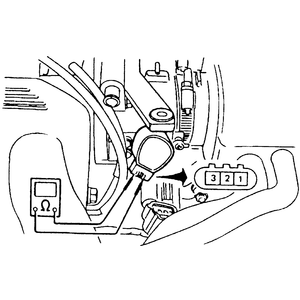
Fig. 4: Throttle sensor testing — 3.3L engine

  1. Turn the ignition switch OFF.
  2. Disconnect the throttle sensor connector.
  3. Measure the resistance between throttle sensor connector terminals 1 and 3. Resistance should be 5 kilo-ohms.
  4. Measure the resistance between terminals 2 and 3 while slowly opening the throttle valve from the closed position.
  5. Resistance should be 10–12 kilo-ohms when the throttle valve is closed and 3–5 kilo-ohms when the throttle is open. Ensure that the resistance increases in response to throttle valve opening.
  6. If the throttle body fails the checks up to this point, replace it.
  7. Disconnect the ECU connectors and measure the resistance of the harness connector between the ECU and the throttle sensor. Resistance should be as follows:
  8. If measurements are not within specification, check and repair the harness or connector.
  9. Measure the resistance of the harness connector between the throttle sensor connector and ground. Resistance should be as follows:

Previous Next