There are two types of exhaust systems. One is the flange type where the component ends are attached with bolts and a gasket in-between. The other exhaust system is the slip joint type. These components slip into one another using clamps to secure them together.
CAUTION
Allow the exhaust system to cool sufficiently before spraying a penetrating oil on exhaust fasteners. Some solvents are highly flammable and could ignite when sprayed on hot exhaust components.
Before removing any component of the exhaust system, always squirt a liquid penetrating oil onto the fasteners for ease of removal. If you have the time, spray the fasteners and allow them to soak overnight.
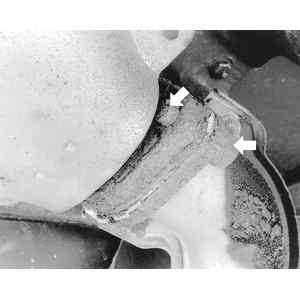
| Nuts and bolts will be extremely difficult to remove when deteriorated with rust
|
CAUTION
Do not perform exhaust repairs or inspection with a hot engine or exhaust system. Allow the system to cool completely before attempting any work. Exhaust systems are noted for sharp edges, flaking metal and rusted bolts. Gloves and eye protection are required. A healthy supply of penetrating oil and rags is highly recommended. Never spray penetrating oil onto a hot exhaust component.
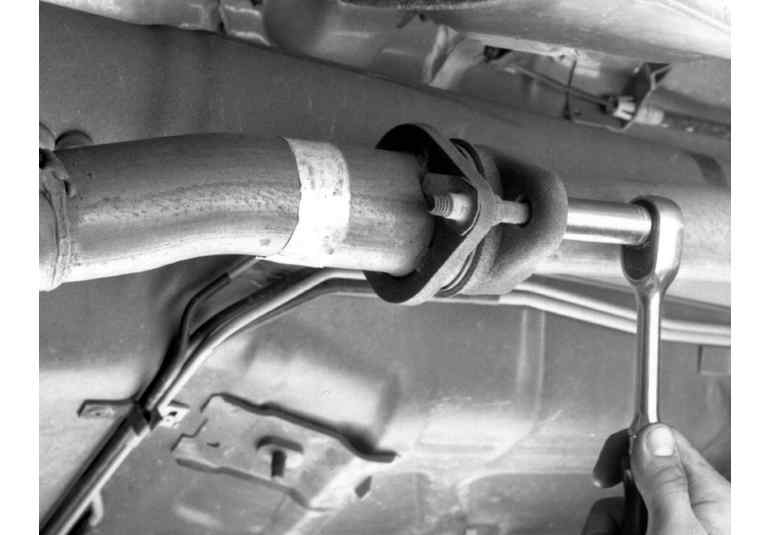
| Example of a flange type exhaust system joint
|
Before removing any component on a flange type system, always squirt a penetrating oil onto the fasteners for ease of removal.
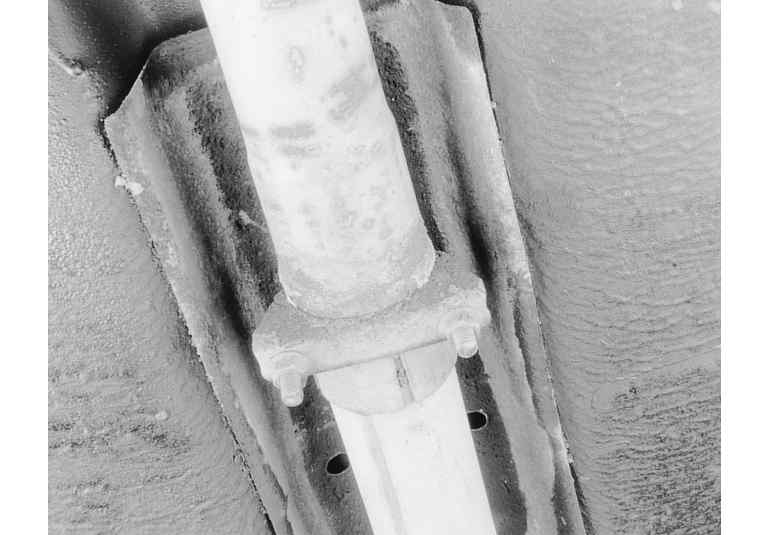
| Example of a common slip joint type system
|
Before removing any component on the slip joint type exhaust system, ALWAYS squirt a liquid rust dissolving agent onto the fasteners for ease of removal. Start by unbolting the exhaust piece at both ends (if required). When unbolting the header pipe from the manifold, make sure that the bolts are free before trying to remove them. if you snap a stud in the exhaust manifold, the stud will have to be removed with a bolt extractor, which often means removal of the manifold itself. Next, remove the mounting U-bolts from around the exhaust pipe you are extracting from the vehicle. Don’t be surprised if the U-bolts break while removing the nuts. Loosen the exhaust pipe from any mounting brackets retaining it to the floor pan and separate the components.