BRAKE (FRONT) FRONT BRAKE(for Disc Type) REPLACEMENT
CAUTION / NOTICE / HINT
- HINT:
-
If a squealing noise occurs from the front brakes while driving, check the pad wear indictor plate. If there are traces of the indictor contacting the disc, the brake pad should be replaced.
PROCEDURE

 1.REMOVE FRONT WHEEL
2.INSPECT PAD LINING THICKNESS
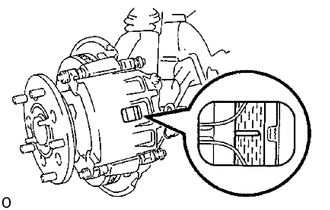
Check the pad thickness through the caliper inspection hole and replace pads if groove can no longer be seen.
- Minimum thickness:
1.0 mm (0.039 in.)
3.REMOVE CALIPER
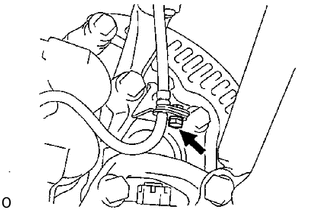
Remove the bolt and brake hose from the steering knuckle.
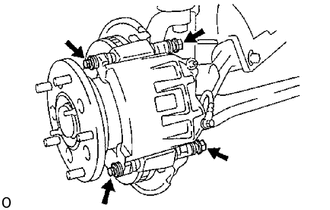
Remove the 4 installation bolts.
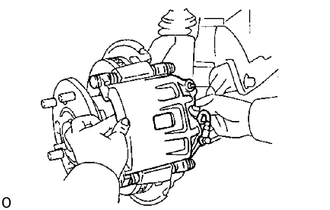
Remove the brake caliper and suspend it so the hose is not stretched.
- HINT:
-
Do not disconnect the brake hose.
4.REMOVE FOLLOWING PARTS
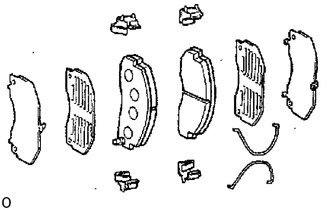
2 anti-squeal springs
2 brake pads
4 anti- squeal shims
4 pad support plates
5. CHECK DISC THICKNESS AND RUNOUT
(Click here XXXXX)
6.INSTALL PAD SUPPORT PLATES
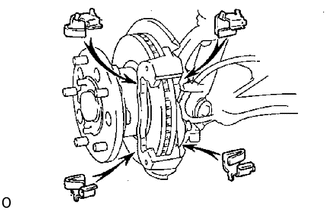
Install the 4 pad support plates to the torque plate.
7.INSTALL NEW PADS
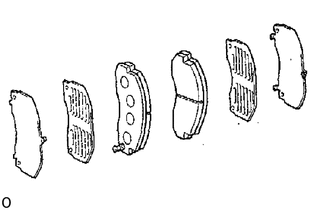
Apply disc brake grease to both sides of the inner anti-squeal shims.
Install the 2 anti- squeal shims on each pad.
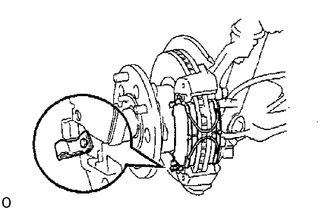
Install the inside pad.
Install the outside pad with the pad wear indicator plate facing downward.
- NOTICE:
-
There should be no oil or grease adhering to the friction surfaces of the pads or the pads or the disc.
Install 2 anti-squeal springs.
8.INSTALL CALIPER
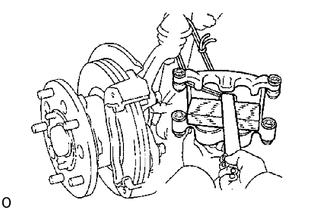
Draw out a small amount of brake fluid from the reservoir.
Place a wooden plate between the piston and caliper.
Press in the pistons with a hammer handle or an equivalent.
- HINT:
-
If the piston is difficult to push in, loosen the bleeder plug and push in the piston while letting some brake fluid escape.
Install the brake caliper carefully so the boot is no wedged.
Install and torque the installation bolts.
- Torque:
Outside bolts 16 N*m (160 kgf*cm, 12 ft*lbf)
Inside bolts 78 N*m (800 kgf*cm, 58 ft*lbf)
Install the brake hose to the steering knuckle with the bolt.
9.INSTALL FRONT WHEEL
10. CHECK THAT FLUID LEVEL IS AT MAX LINE