ON-VEHICLE INSPECTION
Inspection · Vehicles built from Jan 2012
Versions by build date: Sep 2011 – Dec 2011 from Jan 2012
| INSPECT V-RIBBED BELT |
 |
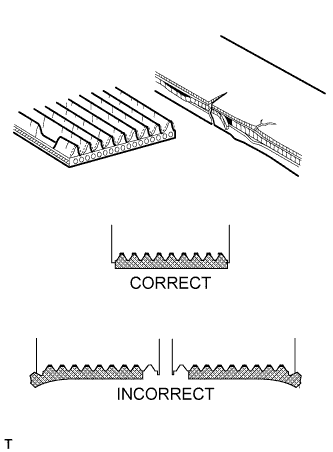
- Check the belt for wear, cracks or other signs of damage.
If any of the following defects is found, replace the V-ribbed belt.
- The belt is cracked.
- The belt is worn out to the extent that the cords are exposed.
- The belt has chunks missing from the ribs.
Check that the belt fits properly in the ribbed grooves.
- HINT:
- Check with your hand to confirm that the belt has not slipped out of the groove on the bottom of the pulley.
- If it has slipped out, replace the V-ribbed belt. Install a new V-ribbed belt.
| INSPECT V-RIBBED BELT TENSION (w/ Viscous Heater) |
|
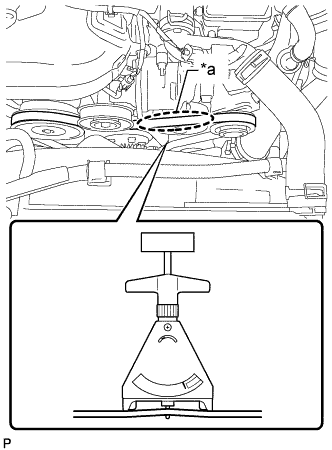
- Using a belt tension gauge, inspect the belt tension.
- Standard Belt Tension:
Item
|
Condition
|
Specified Condition
|
New belt
|
5 to 35°C (41 to 95°F)
|
550 to 800 N (56 to 82 kgf, 123.6 to 179.8 lbf)
|
Used belt
|
5 to 35°C (41 to 95°F)
|
300 to 500 N (31 to 51 kgf, 67.4 to 112.4 lbf)
|
Text in Illustration
*a
|
Measuring Point
|
- HINT:
- When measuring the tension of a new belt, measure the tension immediately after installing it to the engine but before starting the engine.
- A "new belt" is a belt which has been used for less than 5 minutes on a running engine.
- A "used belt" is a belt which has been used on a running engine for 5 minutes or more.
- After installing a new belt, run the engine for approximately 5 minutes and then recheck the tension.
| INSPECT V-RIBBED BELT TENSIONER ASSEMBLY |
|
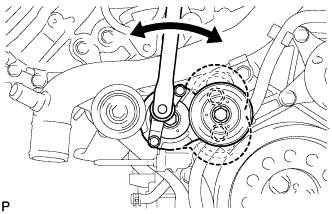
- Check that nothing gets caught in the tensioner by turning it clockwise and counterclockwise.
If a malfunction exists, replace the tensioner.