K320 MULTIDRIVE / CVT CONTINUOUSLY VARIABLE TRANSAXLE SYSTEM P084000 Transmission Fluid Pressure Sensor/Switch "A" Circuit Range/Performance P28287F Pressure Control Solenoid "K" Actuator Stuck Off
DESCRIPTION
The TCM controls the secondary oil pressure based on the secondary oil pressure signal output by the oil pressure sensor.
| DTC No. | Detection Item | DTC Detection Condition | Trouble Area | MIL | Memory | Note |
|---|---|---|---|---|---|---|
| P084000 | Transmission Fluid Pressure Sensor/Switch "A" Circuit Range/Performance | Either of the following conditions is met (1-trip detection logic):
·
When the requested oil pressure is less than 1.0 MPa (10.2 kgf/cm2, 145 psi), the oil pressure sensor output is 2.5 MPa (25.5 kgf/cm2, 363 psi) or more for 3 seconds or more. ·
When the requested oil pressure is 1.4 MPa (14.3 kgf/cm2, 203 psi) or more, the oil pressure sensor output is less than 0.5 MPa (5.1 kgf/cm2, 73 psi) for 2 seconds or more. |
·
Oil pressure sensor ·
Transmission valve body assembly ·
TCM ·
Continuously variable transaxle assembly |
Comes on | DTC stored | SAE Code:
P0841 |
| P28287F | Pressure Control Solenoid "K" Actuator Stuck Off | Either of the following conditions is met (1-trip detection logic):
·
When the requested oil pressure is less than 1.0 MPa (10.2 kgf/cm2, 145 psi), the oil pressure sensor output is 2.5 MPa (25.5 kgf/cm2, 363 psi) or more for 3 seconds or more. ·
When the requested oil pressure is 1.4 MPa (14.3 kgf/cm2, 203 psi) or more, the oil pressure sensor output is less than 0.5 MPa (5.1 kgf/cm2, 73 psi) for 2 seconds or more. |
·
Oil pressure sensor ·
Transmission valve body assembly ·
TCM ·
Continuously variable transaxle assembly |
Comes on | DTC stored | SAE Code:
P2829 |
| Vehicle Condition | |||
|---|---|---|---|
| Pattern 1 | Pattern 2 | ||
| Diagnostic Condition | The requested oil pressure value is less than 1.0 MPa (10.2 kgf/cm2, 145 psi) | ○ | - |
| The requested oil pressure value is 1.4 MPa (14.3 kgf/cm2, 203 psi) or more | - | ○ | |
| Malfunction Condition | The oil pressure sensor output value is 2.5 MPa (25.5 kgf/cm2, 363 psi) or more | ○ | - |
| The oil pressure sensor output value is less than 0.5 MPa (5.1 kgf/cm2, 73 psi) | - | ○ | |
| Duration | 3 seconds or more | 2 seconds or more | |
| Detection Logic | 1-trip detection logic | 1-trip detection logic | |
- HINT:
-
These DTCs are output when either of the above detection patterns is met.
MONITOR DESCRIPTION
The TCM checks for belt clamping high-pressure or low-pressure malfunctions. If a mechanical malfunction of the shift solenoid valve SLS or a malfunction of the oil pressure sensor is detected by the TCM, it illuminates the MIL and stores a DTC.
CONFIRMATION DRIVING PATTERN
- CAUTION:
-
When performing the confirmation driving pattern, obey all speed limits and traffic laws.
- HINT:
-
After repairs have been completed, clear the DTCs and then check that the vehicle has returned to normal by performing the following All Readiness check procedure.
Clear the DTCs (even if no DTCs are stored, perform the clear DTC procedure).
Turn the ignition switch off and wait for at least 30 seconds.
Start the engine.
Perform the D Position Test inspection in Road Test.
Click hereDrivetrain>K320 (MULTIDRIVE / CVT)>CONTINUOUSLY VARIABLE TRANSAXLE SYSTEM>ROAD TEST
Stop the vehicle.
Enter the following menus: Powertrain / Transmission / Utility / All Readiness.
Input the DTC: P084000 or P28287F.
Check the DTC judgment result.
| GTS Display | Description |
|---|---|
| NORMAL | ·
DTC judgment completed ·
System normal |
| ABNORMAL | ·
DTC judgment completed ·
System abnormal |
| INCOMPLETE | ·
DTC judgment not completed ·
Perform driving pattern after confirming DTC enabling conditions |
| N/A | ·
Unable to perform DTC judgment ·
Number of DTCs which do not fulfill DTC preconditions has reached ECU memory limit |
- HINT:
- ·
If the judgment result shows NORMAL, the system is normal.
·If the judgment result shows ABNORMAL, the system has a malfunction.
·If the judgment result shows INCOMPLETE or N/A, perform the Confirmation Driving Pattern and check the DTC judgment result again.
WIRING DIAGRAM
Refer to DTC P084011.
Click hereDrivetrain>K320 (MULTIDRIVE / CVT)>CONTINUOUSLY VARIABLE TRANSAXLE SYSTEM>P084011
CAUTION / NOTICE / HINT
- CAUTION:
- ·
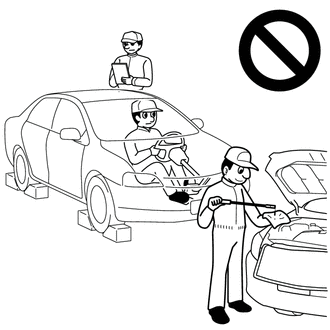
Do not perform a stall test if there are any people or objects near the vehicle.
·The vehicle could begin moving suddenly, resulting in a serious accident.
- ·
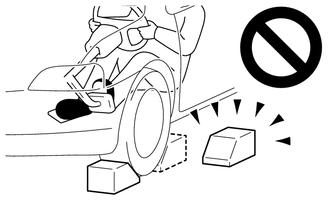
Do not perform a stall test if any wheel chock is out of position.
·The vehicle could begin moving suddenly, resulting in a serious accident.
- ·
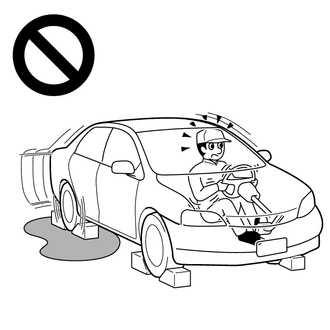
Do not perform the stall test on a slippery or low-friction surface that could allow the tires to spin.
·The vehicle could begin moving suddenly, resulting in a serious accident.
- NOTICE:
- ·
Perform registration and/or initialization when parts related to the continuously variable transaxle system are replaced.
Click hereDrivetrain>K320 (MULTIDRIVE / CVT)>CONTINUOUSLY VARIABLE TRANSAXLE SYSTEM>PRECAUTION
·Check that no DTCs are stored after performing initialization.
Click hereDrivetrain>K320 (MULTIDRIVE / CVT)>CONTINUOUSLY VARIABLE TRANSAXLE SYSTEM>DTC CHECK / CLEAR
- HINT:
-
If any DTCs other than P084000 or P28287F are output, perform troubleshooting for those DTCs first.
PROCEDURE
Read the DTCs using the GTS.
- Powertrain > Transmission > Trouble Codes
- 50001 373
- HINT:
- ·
If DTC P084011 or P084015 is output, perform troubleshooting for that DTC first.
·If DTCs P084011 and P084015 are not output but DTC P282812 or P282814 is output, perform troubleshooting for DTC P282812 or P282814 first.
- Result:
Result Proceed to DTC P084000 and/or P28287F and DTCs other than P084011, P084015, P282812 and P282814 are output A Only P084000 is output B Only P28287F is output C DTC P084000 and/or P28287F and P084011 are output D DTC P084000 and/or P28287F and P084015 are output E DTC P084000 and/or P28287F and P282812 are output F DTC P084000 and/or P28287F and P282814 are output G P084000 and P28287F are output H
A
B
C
D
E
F
G
H
- CAUTION:
-
A stall speed test should always be performed with at least 2 people. One person should observe the condition of the wheels and wheel chocks while the other is performing the test.
- NOTICE:
- ·
This test must be performed after checking and confirming that the engine is normal.
·Perform this test with the CVT fluid temperature between 50 and 100°C (122 and 212°F).
·Perform this test with the air conditioning off.
·Do not perform the stall speed test for longer than 5 seconds.
·When performing the stall speed test repeatedly, wait for 15 seconds or more between tests.
Pre-procedure1
Warm up the engine.
Fully apply the parking brake and chock all 4 wheels.
Procedure1
According to the display on the GTS, perform the Active Test.
- Powertrain > Transmission > Active Test
-
Tester Display Measurement Item Control Range Diagnostic Note Activate the TC Terminal ·Changes to the fluid temperature detection mode
·Performs stall speed test
·Performs secondary oil pressure test
ON or OFF (Vehicle Condition)Ignition switch ON, engine stopped and shift lever in P
According to the display on the GTS, read the Data List.
- Powertrain > Transmission > Data List
-
Tester Display Measurement Item Range Normal Condition Diagnostic Note Belt Clamping Force Sensor Secondary oil pressure value Min.: -64 MPa
Max.: 63.998 MPaSecondary oil pressure inspection:
3.4 to 4.2 MPa (34.7 to 42.8 kgf/cm2, 493 to 609 psi): D position stall test-
- Powertrain > Transmission > Active Test
-
Active Test Display Activate the TC Terminal -
Data List Display Belt Clamping Force Sensor - 50004 373 22 367
Post-procedure1
None.
- Result:
Result Proceed to The value of Belt Clamping Force Sensor is 3.4 MPa or more, and 4.2 MPa or less A The value of Belt Clamping Force Sensor is more than 4.2 MPa, or less than 3.4 MPa B
- HINT:
-
3.4 MPa=34.7 kgf/cm2
-
3.4 MPa=493 psi
-
4.2 MPa=42.8 kgf/cm2
-
4.2 MPa=609 psi
A
B
- CAUTION:
-
A stall speed test should always be performed with at least 2 people. One person should observe the condition of the wheels and wheel chocks while the other is performing the test.
- NOTICE:
- ·
This test must be performed after checking and confirming that the engine is normal.
·Perform this test with the CVT fluid temperature between 50 and 100°C (122 and 212°F).
·Perform this test with the air conditioning off.
·Do not perform the stall speed test for longer than 5 seconds.
·When performing the stall speed test repeatedly, wait for 15 seconds or more between tests.
Pre-procedure1
Warm up the engine.
Fully apply the parking brake and chock all 4 wheels.
Procedure1
According to the display on the GTS, perform the Active Test.
- Powertrain > Transmission > Active Test
-
Tester Display Measurement Item Control Range Diagnostic Note Activate the TC Terminal ·Changes to the fluid temperature detection mode
·Performs stall speed test
·Performs secondary oil pressure test
ON or OFF (Vehicle Condition)Ignition switch ON, engine stopped and shift lever in P
According to the display on the GTS, read the Data List.
- Powertrain > Transmission > Data List
-
Tester Display Measurement Item Range Normal Condition Diagnostic Note Belt Clamping Force Sensor Secondary oil pressure value Min.: -64 MPa
Max.: 63.998 MPaSecondary oil pressure inspection:
2.4 to 3.2 MPa (24.5 to 32.6 kgf/cm2, 348 to 464 psi): R position stall test-
- Powertrain > Transmission > Active Test
-
Active Test Display Activate the TC Terminal -
Data List Display Belt Clamping Force Sensor - 50004 373 22 367
Post-procedure1
None.
- Result:
Result Proceed to The value of Belt Clamping Force Sensor is 2.4 MPa or more, and 3.2 MPa or less A The value of Belt Clamping Force Sensor is more than 3.2 MPa, or less than 2.4 MPa B
- HINT:
-
2.4 MPa=24.5 kgf/cm2
-
2.4 MPa=348 psi
-
3.2 MPa=32.6 kgf/cm2
-
3.2 MPa=464 psi
A
B
Pre-procedure1
Disconnect the oil pressure sensor connector.
Turn the ignition switch to ON.
Procedure1
Measure the voltage according to the value(s) in the table below.
- Standard Voltage:
Tester Connection Condition Specified Condition D47-3 (VC) - D47-1 (E2) Ignition switch ON 4.75 to 5.25 V
Post-procedure1
Turn the ignition switch off.
Connect the oil pressure sensor connector.
- Result:
Proceed to OK NG
OK
NG
- HINT:
-
Click hereDrivetrain>K320 (MULTIDRIVE / CVT)>OIL PRESSURE SENSOR>REMOVAL
- Result:
Proceed to NEXT
NEXT
NEXT
for Registration: Click hereDrivetrain>K320 (MULTIDRIVE / CVT)>CONTINUOUSLY VARIABLE TRANSAXLE SYSTEM>REGISTRATION
for Initialization: Click hereDrivetrain>K320 (MULTIDRIVE / CVT)>CONTINUOUSLY VARIABLE TRANSAXLE SYSTEM>INITIALIZATION
- CAUTION:
-
A stall speed test should always be performed with at least 2 people. One person should observe the condition of the wheels and wheel chocks while the other is performing the test.
- NOTICE:
- ·
This test must be performed after checking and confirming that the engine is normal.
·Perform this test with the CVT fluid temperature between 50 and 100°C (122 and 212°F).
·Perform this test with the air conditioning off.
·Do not perform the stall speed test for longer than 5 seconds.
·When performing the stall speed test repeatedly, wait for 15 seconds or more between tests.
Pre-procedure1
Warm up the engine.
Fully apply the parking brake and chock all 4 wheels.
Procedure1
According to the display on the GTS, perform the Active Test.
- Powertrain > Transmission > Active Test
-
Tester Display Measurement Item Control Range Diagnostic Note Activate the TC Terminal ·Changes to the fluid temperature detection mode
·Performs stall speed test
·Performs secondary oil pressure test
ON or OFF (Vehicle Condition)Ignition switch ON, engine stopped and shift lever in P
According to the display on the GTS, read the Data List.
- Powertrain > Transmission > Data List
-
Tester Display Measurement Item Range Normal Condition Diagnostic Note Belt Clamping Force Sensor Secondary oil pressure value Min.: -64 MPa
Max.: 63.998 MPaSecondary oil pressure inspection:
3.4 to 4.2 MPa (34.7 to 42.8 kgf/cm2, 493 to 609 psi): D position stall test-
- Powertrain > Transmission > Active Test
-
Active Test Display Activate the TC Terminal -
Data List Display Belt Clamping Force Sensor - 50004 373 22 367
Post-procedure1
None.
- Result:
Result Proceed to The value of Belt Clamping Force Sensor is 3.4 MPa or more, and 4.2 MPa or less A The value of Belt Clamping Force Sensor is more than 4.2 MPa, or less than 3.4 MPa B
- HINT:
-
3.4 MPa=34.7 kgf/cm2
-
3.4 MPa=493 psi
-
4.2 MPa=42.8 kgf/cm2
-
4.2 MPa=609 psi
A
B
- CAUTION:
-
A stall speed test should always be performed with at least 2 people. One person should observe the condition of the wheels and wheel chocks while the other is performing the test.
- NOTICE:
- ·
This test must be performed after checking and confirming that the engine is normal.
·Perform this test with the CVT fluid temperature between 50 and 100°C (122 and 212°F).
·Perform this test with the air conditioning off.
·Do not perform the stall speed test for longer than 5 seconds.
·When performing the stall speed test repeatedly, wait for 15 seconds or more between tests.
Pre-procedure1
Warm up the engine.
Fully apply the parking brake and chock all 4 wheels.
Procedure1
According to the display on the GTS, perform the Active Test.
- Powertrain > Transmission > Active Test
-
Tester Display Measurement Item Control Range Diagnostic Note Activate the TC Terminal ·Changes to the fluid temperature detection mode
·Performs stall speed test
·Performs secondary oil pressure test
ON or OFF (Vehicle Condition)Ignition switch ON, engine stopped and shift lever in P
According to the display on the GTS, read the Data List.
- Powertrain > Transmission > Data List
-
Tester Display Measurement Item Range Normal Condition Diagnostic Note Belt Clamping Force Sensor Secondary oil pressure value Min.: -64 MPa
Max.: 63.998 MPaSecondary oil pressure inspection:
2.4 to 3.2 MPa (24.5 to 32.6 kgf/cm2, 348 to 464 psi): R position stall test-
- Powertrain > Transmission > Active Test
-
Active Test Display Activate the TC Terminal -
Data List Display Belt Clamping Force Sensor - 50004 373 22 367
Post-procedure1
None.
- Result:
Result Proceed to The value of Belt Clamping Force Sensor is 2.4 MPa or more, and 3.2 MPa or less A The value of Belt Clamping Force Sensor is more than 3.2 MPa, or less than 2.4 MPa B
- HINT:
-
2.4 MPa=24.5 kgf/cm2
-
2.4 MPa=348 psi
-
3.2 MPa=32.6 kgf/cm2
-
3.2 MPa=464 psi
A
B
- HINT:
-
When Not Using the Engine Support Bridge: Click hereDrivetrain>K320 (MULTIDRIVE / CVT)>CONTINUOUSLY VARIABLE TRANSAXLE ASSEMBLY (When Not Using the Engine Support Bridge)>REMOVAL
-
When Using the Engine Support Bridge: Click hereDrivetrain>K320 (MULTIDRIVE / CVT)>CONTINUOUSLY VARIABLE TRANSAXLE ASSEMBLY (When Using the Engine Support Bridge)>REMOVAL
- Result:
Proceed to NEXT
NEXT
for Registration: Click hereDrivetrain>K320 (MULTIDRIVE / CVT)>CONTINUOUSLY VARIABLE TRANSAXLE SYSTEM>REGISTRATION
for Initialization: Click hereDrivetrain>K320 (MULTIDRIVE / CVT)>CONTINUOUSLY VARIABLE TRANSAXLE SYSTEM>INITIALIZATION
- CAUTION:
-
A stall speed test should always be performed with at least 2 people. One person should observe the condition of the wheels and wheel chocks while the other is performing the test.
- NOTICE:
- ·
This test must be performed after checking and confirming that the engine is normal.
·Perform this test with the CVT fluid temperature between 50 and 100°C (122 and 212°F).
·Perform this test with the air conditioning off.
·Do not perform the stall speed test for longer than 5 seconds.
·When performing the stall speed test repeatedly, wait for 15 seconds or more between tests.
Pre-procedure1
Warm up the engine.
Fully apply the parking brake and chock all 4 wheels.
Procedure1
According to the display on the GTS, perform the Active Test.
- Powertrain > Transmission > Active Test
-
Tester Display Measurement Item Control Range Diagnostic Note Activate the TC Terminal ·Changes to the fluid temperature detection mode
·Performs stall speed test
·Performs secondary oil pressure test
ON or OFF (Vehicle Condition)Ignition switch ON, engine stopped and shift lever in P
According to the display on the GTS, read the Data List.
- Powertrain > Transmission > Data List
-
Tester Display Measurement Item Range Normal Condition Diagnostic Note Belt Clamping Force Sensor Secondary oil pressure value Min.: -64 MPa
Max.: 63.998 MPaSecondary oil pressure inspection:
3.4 to 4.2 MPa (34.7 to 42.8 kgf/cm2, 493 to 609 psi): D position stall test-
- Powertrain > Transmission > Active Test
-
Active Test Display Activate the TC Terminal -
Data List Display Belt Clamping Force Sensor - 50004 373 22 367
Post-procedure1
None.
- Result:
Result Proceed to The value of Belt Clamping Force Sensor is 3.4 MPa or more, and 4.2 MPa or less A The value of Belt Clamping Force Sensor is more than 4.2 MPa, or less than 3.4 MPa B
- HINT:
-
3.4 MPa=34.7 kgf/cm2
-
3.4 MPa=493 psi
-
4.2 MPa=42.8 kgf/cm2
-
4.2 MPa=609 psi
A
B
- CAUTION:
-
A stall speed test should always be performed with at least 2 people. One person should observe the condition of the wheels and wheel chocks while the other is performing the test.
- NOTICE:
- ·
This test must be performed after checking and confirming that the engine is normal.
·Perform this test with the CVT fluid temperature between 50 and 100°C (122 and 212°F).
·Perform this test with the air conditioning off.
·Do not perform the stall speed test for longer than 5 seconds.
·When performing the stall speed test repeatedly, wait for 15 seconds or more between tests.
Pre-procedure1
Warm up the engine.
Fully apply the parking brake and chock all 4 wheels.
Procedure1
According to the display on the GTS, perform the Active Test.
- Powertrain > Transmission > Active Test
-
Tester Display Measurement Item Control Range Diagnostic Note Activate the TC Terminal ·Changes to the fluid temperature detection mode
·Performs stall speed test
·Performs secondary oil pressure test
ON or OFF (Vehicle Condition)Ignition switch ON, engine stopped and shift lever in P
According to the display on the GTS, read the Data List.
- Powertrain > Transmission > Data List
-
Tester Display Measurement Item Range Normal Condition Diagnostic Note Belt Clamping Force Sensor Secondary oil pressure value Min.: -64 MPa
Max.: 63.998 MPaSecondary oil pressure inspection:
2.4 to 3.2 MPa (24.5 to 32.6 kgf/cm2, 348 to 464 psi): R position stall test-
- Powertrain > Transmission > Active Test
-
Active Test Display Activate the TC Terminal -
Data List Display Belt Clamping Force Sensor - 50004 373 22 367
Post-procedure1
None.
- Result:
Result Proceed to The value of Belt Clamping Force Sensor is 2.4 MPa or more, and 3.2 MPa or less A The value of Belt Clamping Force Sensor is more than 3.2 MPa, or less than 2.4 MPa B
- HINT:
-
2.4 MPa=24.5 kgf/cm2
-
2.4 MPa=348 psi
-
3.2 MPa=32.6 kgf/cm2
-
3.2 MPa=464 psi
A
B
Pre-procedure1
Disconnect the oil pressure sensor connector.
Turn the ignition switch to ON.
Procedure1
Measure the voltage according to the value(s) in the table below.
- Standard Voltage:
Tester Connection Condition Specified Condition D47-3 (VC) - D47-1 (E2) Ignition switch ON 4.75 to 5.25 V
Post-procedure1
Turn the ignition switch off.
Connect the oil pressure sensor connector.
- Result:
Proceed to OK NG
OK
NG
Pre-procedure1
Disconnect the transmission wire connector from the shift solenoid valve SLS.
- HINT:
-
Click hereDrivetrain>K320 (MULTIDRIVE / CVT)>VALVE BODY ASSEMBLY>REMOVAL
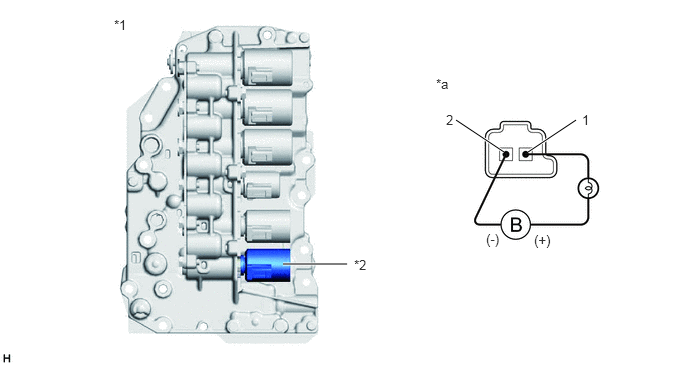
| *1 | Transmission Valve Body Assembly | *2 | Shift Solenoid Valve SLS |
| *a | Component without harness connected
(Shift Solenoid Valve SLS) |
- | - |
Procedure1
Connect a positive (+) lead from the battery with a 21 W bulb to terminal 1 and a negative (-) lead to terminal 2 of the shift solenoid valve SLS connector. Check that the valve moves and makes an operating sound.
- OK:
Valve moves and makes an operating sound.
Post-procedure1
None.
- Result:
Proceed to OK NG
OK
NG
- HINT:
-
Click hereDrivetrain>K320 (MULTIDRIVE / CVT)>OIL PRESSURE SENSOR>REMOVAL
- Result:
Proceed to NEXT
NEXT
- HINT:
-
When Not Using the Engine Support Bridge: Click hereDrivetrain>K320 (MULTIDRIVE / CVT)>CONTINUOUSLY VARIABLE TRANSAXLE ASSEMBLY (When Not Using the Engine Support Bridge)>REMOVAL
-
When Using the Engine Support Bridge: Click hereDrivetrain>K320 (MULTIDRIVE / CVT)>CONTINUOUSLY VARIABLE TRANSAXLE ASSEMBLY (When Using the Engine Support Bridge)>REMOVAL
- Result:
Proceed to NEXT
NEXT
for Registration: Click hereDrivetrain>K320 (MULTIDRIVE / CVT)>CONTINUOUSLY VARIABLE TRANSAXLE SYSTEM>REGISTRATION
for Initialization: Click hereDrivetrain>K320 (MULTIDRIVE / CVT)>CONTINUOUSLY VARIABLE TRANSAXLE SYSTEM>INITIALIZATION
NEXT
for Registration: Click hereDrivetrain>K320 (MULTIDRIVE / CVT)>CONTINUOUSLY VARIABLE TRANSAXLE SYSTEM>REGISTRATION
for Initialization: Click hereDrivetrain>K320 (MULTIDRIVE / CVT)>CONTINUOUSLY VARIABLE TRANSAXLE SYSTEM>INITIALIZATION