CLUTCH-MODULAR
DESCRIPTION
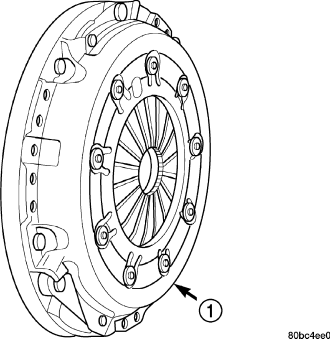
The modular clutch assembly (1) is located between the engine and manual transaxle in the transaxle bellhousing, and is responsible for transmitting engine power to the transaxle. The modular clutch is an assembly which incorporates a self-adjusting design and consists of the following components:
- Flywheel
- Clutch Disc
- Pressure Plate
- Diaphragm Spring
- Adjusting Ring
- Sensor
- Cover
OPERATION
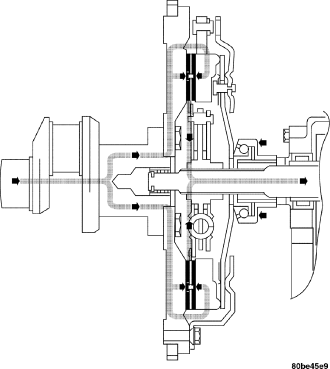
The modular clutch assembly is designed to transmit power from the engine to the manual transaxle. This is accomplished by the friction and clamping force generated when the spring loaded pressure plate locks the clutch disc to the flywheel. The clutch disc, which is splined to the transaxle input shaft, transmits power until the center of the diaphragm spring is depressed, and the clamp force is removed from the disc.
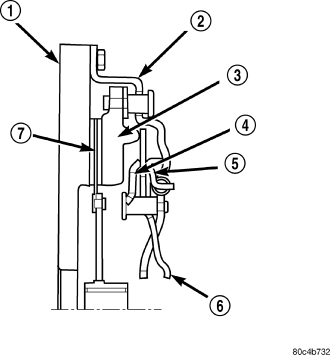
The self-adjusting feature of this clutch assembly relies on the sensor ring (4) and the adjuster ring (5), which works its way around a ramped clutch cover (2), taking up clearance as the clutch disc wears and maintaining diaphragm spring force throughout the life of the clutch. The primary benefits of this design are reduced pedal effort, constant release load over clutch life, and extended clutch life.
REMOVAL
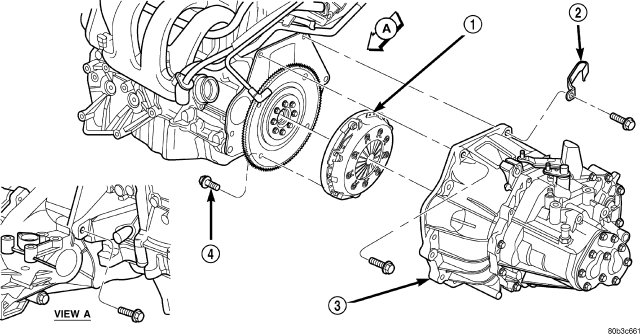
1. Remove transaxle (3) from vehicle (Refer to 21 - TRANSMISSION/TRANSAXLE/MANUAL - REMOVAL).
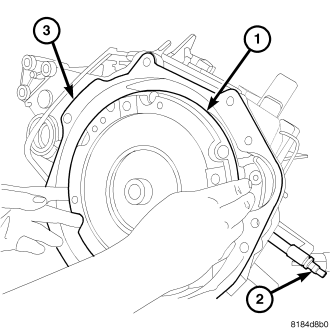
2. Remove modular clutch assembly (1) from transaxle input shaft.
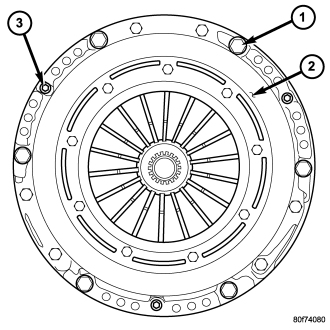
3. Disassemble modular clutch assembly (If individual parts are available). Remove six pressure plate-to-flywheel bolts (1).Remove pressure plate (2) and disc from flywheel.
INSPECTION
Fluid contamination is a frequent cause of clutch malfunctions. Oil, grease, water, or other fluids on the clutch contact surfaces will cause faulty operation.
During inspection, note if any components are contaminated. Look for evidence of oil, grease, or water/road splash on clutch components.
OIL CONTAMINATION
Oil contamination indicates a leak at the rear main seal and/or transaxle input shaft. Oil leaks produce a residue of oil on the transaxle housing interior, clutch cover and flywheel. Heat buildup caused by slippage can bake the oil residue onto the components. This glaze-like residue ranges in color from amber to black.
GREASE CONTAMINATION
Grease contamination is usually a product of over-lubrication. During clutch service, apply only a small amount of grease to the input shaft splines. Excess grease may be thrown off during operation, contaminating the disc.
ROAD SPLASH/WATER CONTAMINATION
Road splash contamination is usually caused by driving the vehicle through deep water puddles. Water can be forced into the clutch housing, causing clutch components to become contaminated. Facing of disc will absorb moisture and bond to the flywheel and/or, pressure plate, if vehicle is allowed to stand for some time before use. If this condition occurs, replacement of clutch assembly may be required. Drive the vehicle until normal clutch operating temperature has been obtained. This will dry off disc assembly, pressure plate, and flywheel.
INSTALLATION
1. Install clutch module onto input shaft.
2. Install transaxle into vehicle (Refer to 21 - TRANSMISSION/TRANSAXLE/MANUAL - INSTALLATION).