CYLINDER-SLAVE
DESCRIPTION
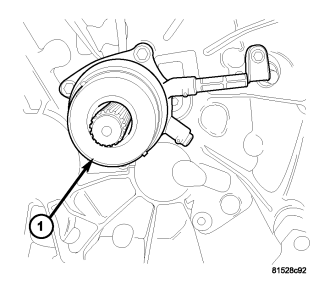
The clutch slave cylinder (1) consists of a hydraulic piston and cylinder, seal and return spring. It is fastened to the transaxle bellhousing. The slave cylinder is connected to the clutch master cylinder hydraulic pipe, which is retained to the cylinder by a pair of retainer clips, and has a bleed port to facilitate the removal of air from the system.
The clutch release system (1) utilizes a slave cylinder of a concentric design, having all components fixed about the same axis. The concentric slave cylinder (CSC) is mounted to the inside of the clutch bellhousing and is serviced only as an assembly.
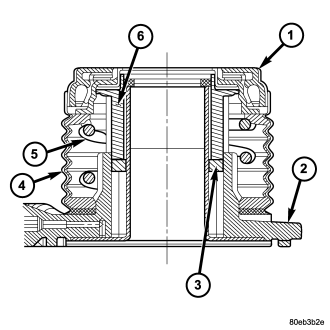
The concentric design permits high efficiency, resulting in low and consistent pedal effort, as well as automatic adjustment to compensate for clutch disc wear. The CSC is a self-contained unit, consisting of a main body (2) and piston (6), spring (5), integrated release bearing (1), and a rubber boot (4).
REMOVAL
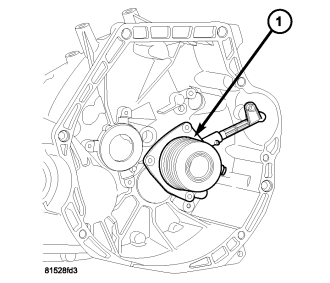
NOTE: To prevent drainage of clutch master cylinder assembly upon slave cylinder removal, it is necessary to make sure brake master cylinder fluid level is full and reservoir cap is installed tight.
1. Remove transaxle from vehicle (Refer to 21 - TRANSMISSION/TRANSAXLE/MANUAL - REMOVAL).
2. Remove bolts to slave cylinder-to-clutch bellhousing bolts and remove slave cylinder (1) from transaxle.
INSTALLATION
1. Install slave cylinder (1) to transaxle using new bolts.
NOTE: Torque three CSC body screws first, then torque the fluid tube attachment.
2. Torque slave cylinder-to-case bolts in three steps:
- 2 N·m (18 in. lbs.)
- 5 N·m (44 in. lbs.)
- 8.4 N·m (74 in. lbs.)
3. Install transaxle (Refer to 21 - TRANSMISSION/TRANSAXLE/MANUAL - INSTALLATION) .
4. Bleed clutch hydraulic system. (Refer to 6 - CLUTCH - STANDARD PROCEDURE)