INSTALLATION
FRONT
WARNING: To avoid serious or fatal injury, on vehicles equipped with airbags, disable the supplemental restraint system before attempting any steering wheel, steering column, airbag, occupant classification system, seat belt tensioner, impact sensor, or instrument panel component diagnosis or service. Disconnect and isolate the battery negative (ground) cable, then wait two minutes for the system capacitor to discharge before performing further diagnosis or service. This is the only sure way to disable the supplemental restraint system. Failure to take the proper precautions could result in accidental airbag deployment.
WARNING: To avoid serious or fatal injury, never strike or drop the front impact sensor, as it can damage the impact sensor or affect its calibration. The front impact sensor enables the system to deploy the front supplemental restraints. If an impact sensor is accidentally dropped during service, the sensor must be scrapped and replaced with a new unit. Failure to observe this warning could result in accidental, incomplete, or improper front supplemental restraint deployment.
NOTE: The front and side impact sensors are interchangeable.
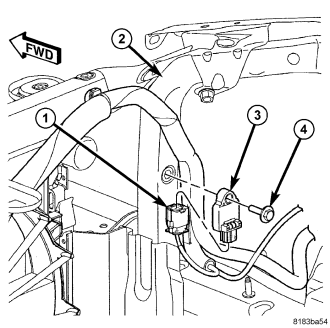
1. Position the right or left front impact sensor (3) into the engine compartment.
2. Reconnect the engine compartment wire harness connector (1) to the sensor connector receptacle.
3. Carefully position the sensor onto the back of the right or left radiator support vertical member (2). Be certain that the anti-rotation pin on the back of the sensor is engaged in the clearance hole of the radiator support.
4. Install and tighten the screw (4) that secures the sensor to the back of the support vertical member. Tighten the screw to 8 N·m (70 in. lbs.).
5. Do not reconnect the battery negative cable at this time. The supplemental restraint system verification test procedure should be performed following service of any supplemental restraint system component. (Refer to 8 - ELECTRICAL/RESTRAINTS - STANDARD PROCEDURE - VERIFICATION TEST).
SIDE - B-PILLAR
WARNING: To avoid serious or fatal injury, on vehicles equipped with airbags, disable the supplemental restraint system before attempting any steering wheel, steering column, airbag, occupant classification system, seat belt tensioner, impact sensor, or instrument panel component diagnosis or service. Disconnect and isolate the battery negative (ground) cable, then wait two minutes for the system capacitor to discharge before performing further diagnosis or service. This is the only sure way to disable the supplemental restraint system. Failure to take the proper precautions could result in accidental airbag deployment.
WARNING: To avoid serious or fatal injury, never strike or drop the side impact sensor, as it can damage the impact sensor or affect its calibration. The side impact sensor enables the system to deploy the side curtain supplemental restraints. If an impact sensor is accidentally dropped during service, the sensor must be scrapped and replaced with a new unit. Failure to observe this warning could result in accidental, incomplete, or improper front supplemental restraint deployment.
NOTE: The front and side impact sensors are interchangeable.
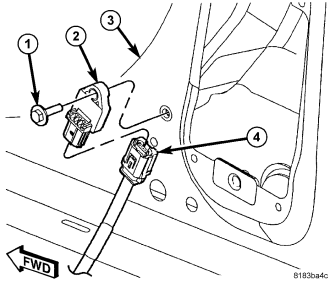
1. Reconnect the body wire harness connector (4) to the side impact sensor (2) connector receptacle.
2. Position the sensor onto the inner B-pillar (3). Be certain that the anti-rotation pin on the back of the sensor is engaged in the clearance hole of the B-pillar.
3. Install and tighten the screw (1) that secures the sensor to the inner B-pillar. Tighten the screw to 8 N·m (70 in. lbs.).
4. Reinstall the lower trim onto the inside of the B-pillar. (Refer to 23 - BODY/INTERIOR/B-PILLAR LOWER TRIM - INSTALLATION).
5. Do not reconnect the battery negative cable at this time. The supplemental restraint system verification test procedure should be performed following service of any supplemental restraint system component. (Refer to 8 - ELECTRICAL/RESTRAINTS - STANDARD PROCEDURE - VERIFICATION TEST).
SIDE - C-PILLAR
WARNING: To avoid serious or fatal injury, on vehicles equipped with airbags, disable the supplemental restraint system before attempting any steering wheel, steering column, airbag, occupant classification system, seat belt tensioner, impact sensor, or instrument panel component diagnosis or service. Disconnect and isolate the battery negative (ground) cable, then wait two minutes for the system capacitor to discharge before performing further diagnosis or service. This is the only sure way to disable the supplemental restraint system. Failure to take the proper precautions could result in accidental airbag deployment.
WARNING: To avoid serious or fatal injury, never strike or drop the side impact sensor, as it can damage the impact sensor or affect its calibration. The side impact sensor enables the system to deploy the side curtain supplemental restraints. If an impact sensor is accidentally dropped during service, the sensor must be scrapped and replaced with a new unit. Failure to observe this warning could result in accidental, incomplete, or improper front supplemental restraint deployment.
NOTE: The front and side impact sensors are interchangeable.
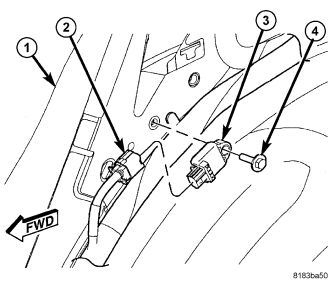
1. Reconnect the body wire harness connector (2) to the side impact sensor (3) connector receptacle.
2. Position the sensor onto the lower inner C-pillar (1). Be certain that the anti-rotation pin on the back of the sensor is engaged in the clearance hole of the C-pillar.
3. Install and tighten the screw (4) that secures the sensor to the inner C-pillar. Tighten the screw to 8 N·m (70 in. lbs.).
4. Reinstall the quarter trim panel onto the inner lower C-pillar. (Refer to 23 - BODY/INTERIOR/QUARTER TRIM PANEL - INSTALLATION).
5. Do not reconnect the battery negative cable at this time. The supplemental restraint system verification test procedure should be performed following service of any supplemental restraint system component. (Refer to 8 - ELECTRICAL/RESTRAINTS - STANDARD PROCEDURE - VERIFICATION TEST).