PAD, Heater
DESCRIPTION
DESCRIPTION
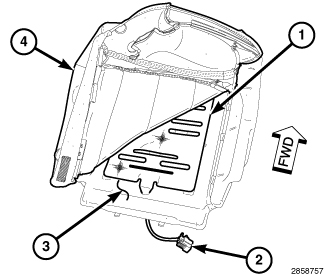 |
Vehicles equipped with the optional heated seat system have four heated seat elements. One heating element (1) is used for each front seat bottom cushion and another heating element is used for each front seat back cushion.
All of the heated seat elements consist of multiple heating circuits operating in parallel throughout the element and a wire lead and connector (2). The heated seat elements are captured between the seat cushion (3) and seat cover (4).
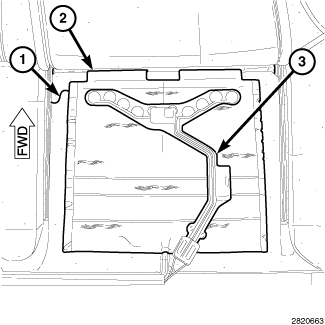 |
On all models, an Occupant Detection Sensor (ODS) (3) is located directly below the passenger side front seat cushion cover. This sensor provides information to the Occupant Restraint Controller (ORC) used for control of the passenger belt alert feature (Refer to 10 - Restraints/SENSOR, Occupant Detection - Description) .
Whenever the ODS has been removed from the seat cushion foam (1) or heater element (2), it must be replaced with a new ODS unit (Refer to 10 - Restraints/SENSOR, Occupant Detection - Removal)
.
OPERATION
OPERATION
Battery current is directed to the heated seat elements by the Heated Seat Module (HSM). The HMS will energize the heated seat elements when the heated seat switch is pressed to high or low heating levels.
As electrical current passes through each heated seat element, the resistance of the wire used in the element disperse some of the electrical current in the form of heat. The heat produced by the heated seat element then radiates through the seat bottom and seat back trim covers, warming the seat covers and its occupant.
The heated seat elements cannot be repaired and must be replaced if found inoperative or damaged.
DIAGNOSIS AND TESTING - HEATED SEAT ELEMENT
DIAGNOSIS AND TESTING - HEATED SEAT ELEMENT
| NOTE: |
For complete circuit diagrams, see Wiring Information. Wiring Information includes wiring diagrams, connector pin-out and location views, details of wire harness routing and retention, splice and ground locations and proper wire and connector repair procedures. |
| NOTE: |
The wire harness connectors for the heating elements are located under the seat. |
| NOTE: |
When testing the heated seat elements for resistance, be certain to sit in the seat in question and move around the heating elements within the seat while testing. Moving the heating elements will help eliminate the possibility of an intermittent open in the element, which would only be evident in a certain position. |
- Locate and disconnect the seat electrical connectors as necessary.
- Check the resistance between the circuits leading in and out of the suspect heated seat element. The resistance should be between the specifications listed in the following Heated Seat Element Resistance chart. If OK, (Refer to 08 - Electrical/8G - Heated/Cooled Systems/Heated Seats - Diagnosis and Testing) . If not OK, replace the inoperative heated seat element (Refer to 08 - Electrical/8G - Heated/Cooled Systems/Heated Seats/PAD, Heater - Removal) .
HEATED SEAT ELEMENT RESISTANCE
|
Element Location |
Acceptable Resistance Value |
|---|---|
|
Seat Bottom Cushion |
6.36 - 2.97 ohms |
|
Seat Back Cushion |
6.36 - 2.97 ohms |
REMOVAL
REMOVAL
To avoid serious or fatal injury on vehicles equipped with airbags, disable the Supplemental Restraint System (SRS) before attempting any steering wheel, steering column, airbag, seat belt tensioner, impact sensor or instrument panel component diagnosis or service. Disconnect and isolate the battery negative (ground) cable, then wait two minutes for the system capacitor to discharge before performing further diagnosis or service. This is the only sure way to disable the SRS. Failure to take the proper precautions could result in accidental airbag deployment.
WARNING:
| NOTE: |
Seat bottom cushion shown. Seat back cushion similar. |
 |
- Disconnect and isolate the negative battery cable.
- Remove the seat and place it on a workbench (Refer to 23 - Body/Seats/SEAT - Removal) .
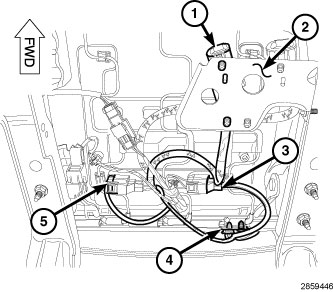
- Disconnect the heated seat pad electrical connectors (3 and 5).
- Disengage the air bag electrical connector (1) from the bracket (2).
-
Disengage the wiring harnesses from the plastic tab (4) at the rear of the seat bottom cushion.
NOTE: On all models, the front passenger seat contains an Occupant Detection Sensor (ODS) to provide information to the Occupant Restraint Controller (ORC). Typical Occupant Detection Sensor (ODS) shown.
-
When servicing a front passenger seat heating element (2), be sure to disconnect the wiring harness for the Occupant Detection Sensor (ODS) (3) (Refer to 10 - Restraints/SENSOR, Occupant Detection - Removal)
.
- Remove the appropriate seat bottom or seat back cushion and place it on a workbench (Refer to 23 - Body/Seats).
- Remove the seat cover (4) from the seat cushion (3) (Refer to 23 - Body/Seats).
-
For installation reference, make note of the position of the heated seat element (1) and the routing of the wire lead and connector (2) on the cushion being serviced.
CAUTION: If a heated seat element pad must be replaced, the seat cushion must also be replaced. Attempted removal of the heated seat element will result in excessive foam removal and cause damage to seating area of the cushion.
-
Do not attempt to remove the heated seat element from the foam cushion. If the heated seat element is inoperative, both the heated seat element and the cushion will need to be replaced. If equipped with an ODS, it too will need to be replaced.
INSTALLATION
INSTALLATION
A new Occupant Detection Sensor (ODS) must be installed when servicing the front passenger seat bottom heating element and cushion. Do not attempt to reuse the original ODS. Failure to follow these instructions may result in serious or fatal injury.
WARNING:
If a heated seat element pad must
be replaced, the seat cushion must also be replaced. Attempted removal
of the heated seat element will result in excessive foam removal and
cause damage to seating area of the cushion.
CAUTION:
| NOTE: |
Seat bottom cushion shown. Seat back cushion similar. |
|
-
Peel off the adhesive backing from the new heated seat element (1).
CAUTION: During heated seat element replacement, be careful not to fold or crease the new heating element. Folds or creases will cause premature heated seat element failure.
- Position the new heated seat element onto the new cushion (3) in the same location as on the original cushion. Make sure the wire lead and connector (2) are correctly routed.
-
Firmly press the new heated seat element onto the new foam cushion. Make sure the adhesive is fully adhered to the cushion.
NOTE: On all models, the front passenger seat contains an Occupant Detection Sensor (ODS) to provide information to the Occupant Restraint Controller (ORC). Typical Occupant Detection Sensor (ODS) shown.
-
Install a new Occupant Detection Sensor (ODS) (3) when servicing the front passenger seat bottom cushion (1) (Refer to 10 - Restraints/SENSOR, Occupant Detection - Installation)
.
-
Install the seat cover and cushion (Refer to 23 - Body/Seats).
NOTE: Make certain the heated seat element wire harness, air bag wiring harness and the ODS wiring harness (when equipped) are correctly routed and fully engaged to the seat back and bottom.
- Correctly route and engage the wiring harnesses to the plastic tab (4) at the rear of the seat bottom cushion.
- Connect the heated seat pad electrical connectors (3 and 5).
- Engage the air bag electrical connector (1) to the bracket (2).
- If equipped with ODS, connect the ODS electrical connector (Refer to 10 - Restraints/SENSOR, Occupant Detection - Installation) .
- Install the seat (Refer to 23 - Body/Seats/SEAT - Installation) .
- Reconnect the negative battery cable.
-
Verify proper heated seat system operation.