 |
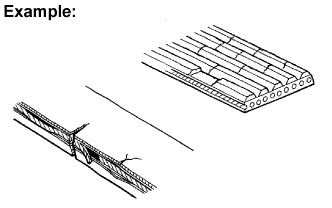
Visually check the drive belt for excessive wear, frayed cords, etc.
If any defect is found, replace the drive belt.
- HINT:
- Cracks on the rib side of a belt are considered acceptable. Replace the belt if there are any missing ribs.
POWER STEERING SYSTEM > ON-VEHICLE INSPECTION |
| 1. INSPECT DRIVE BELT |
|
Visually check the drive belt for excessive wear, frayed cords, etc.
If any defect is found, replace the drive belt.
| 2. CHECK FLUID LEVEL |
Keep the vehicle level.
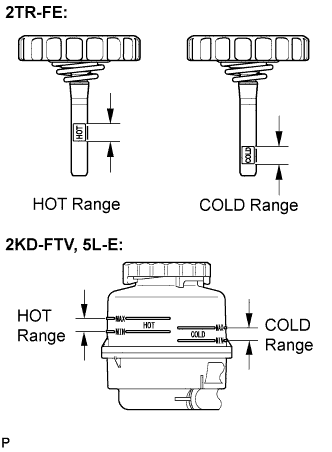 |
With the engine stopped, check the fluid level in the reservoir.
If necessary, add fluid.
Start the engine and run at idle.
Turn the steering wheel from lock to lock several times to raise fluid temperature.
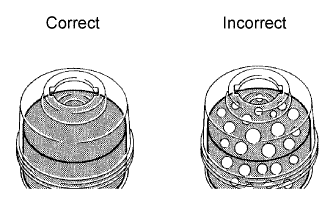 |
Check for foaming or emulsification.
If foaming or emulsification is identified, bleed the power steering system (Click here).
With the engine idling, measure the fluid level in the oil reservoir.
Stop the engine.
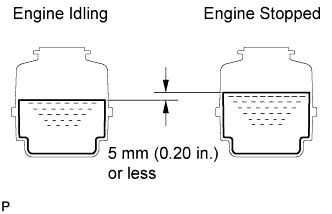 |
Wait a few minutes and remeasure the fluid level in the oil reservoir.
Check the fluid level.
| 3. INSPECT STEERING FLUID PRESSURE |
Disconnect the pressure feed tube assembly .
Start the engine and run at idle.
Turn the steering wheel from lock to lock several times to raise fluid temperature.
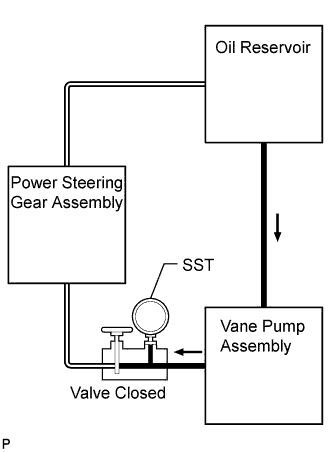 |
With the engine idling, close the valve of the SST and observe the reading on the SST.
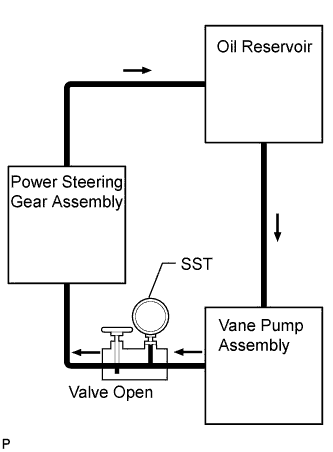 |
With the engine idling, open the valve fully.
Measure the fluid pressure at engine speeds of 1,000 rpm and 3,000 rpm.
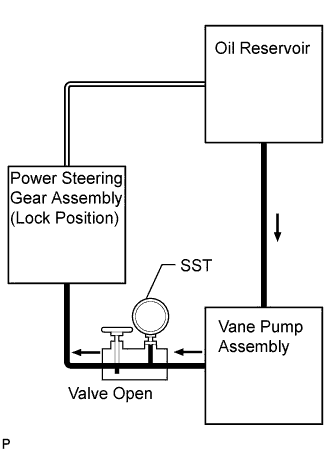 |
With the engine idling and the valve fully opened, turn the steering wheel left or right to the full lock position. Observe the reading on the SST.
Disconnect the SST.
Connect the pressure feed tube assembly
| 4. CHECK STEERING EFFORT |
Stop the vehicle on a level, paved surface and align the wheels straight ahead.
Disconnect the negative (-) battery cable from the battery (Click here).
Remove the steering pad (Click here).
Connect the negative (-) battery cable to the battery.
Using a torque wrench, check if the steering wheel set nut is properly tightened.
Start the engine and run at idle.
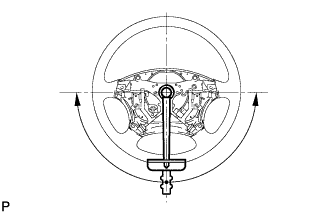 |
Turn the steering wheel 90 degrees to the right and check steering effort (torque) while turning the wheel. Check in the opposite direction in the same manner.
Disconnect the negative (-) battery cable from the battery.
Torque the steering wheel set nut.
Install the steering pad (Click here).
Connect the negative (-) battery cable to the battery.
Clear the DTCs (Click here).
Perform initialization (Click here).
Inspect the airbag warning light (Click here).