SUSPENSION CONTROL SUSPENSION CONTROL SYSTEM(w/ KDSS) ON-VEHICLE INSPECTION
PROCEDURE

 1.INSPECT VEHICLE HEIGHT
- NOTICE:
- ·
Perform the inspection on a level surface.
·Make sure that the wheels are on the ground and facing straight ahead.
·Perform the inspection with the vehicle load completely on the suspension.
- HINT:
- ·
Perform this step with the fuel tank full.
·If there are any parts installed to the vehicle which place any unbalanced load on the left or right side of the vehicle, remove them.
Set the tire pressure to the specified value(s) (See page Suspension>TIRE / WHEEL>TIRE AND WHEEL SYSTEM>INSPECTION).
Bounce the vehicle to stabilize the suspension.
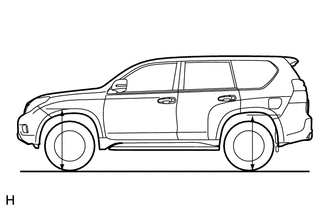
Measure the distance from the ground to the top of the bumper and calculate the difference in the vehicle height between the left and right sides. Perform this procedure for both the front and rear wheels.
- Height difference of left and right sides:
20 mm (0.787 in.) or less
- HINT:
- ·
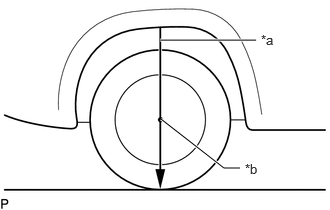 1.677,1.24 2.333,1.75 2.333,1.75 2.5,1.75 true 1.667,0.417 2.667,0.417 true 2.552,1.677 2.76,1.875 0.208,0.198 10 true *b 2.719,0.333 2.927,0.531 0.208,0.198 10 true *a
*a String *b Wheel center
Hang a string from the fender to determine the position where it passes through the center of the wheel (center of the center ornament) and measure the height as shown in the illustration.
·When the difference in vehicle height between the left and right sides is outside of the specification, perform air bleeding.
Click hereSuspension>SUSPENSION CONTROL>SUSPENSION CONTROL SYSTEM (w/ KDSS)>BLEEDING
2.INSPECT FOR SUSPENSION FLUID LEAK
- CAUTION:
-
Fluid is pumped into the system at a high pressure of approximately 3 MPa (30.6 kgf/cm2, 435 psi). If a fluid leak is discovered, immediately release the pressure and repair the fluid leak.
Perform a driving test.
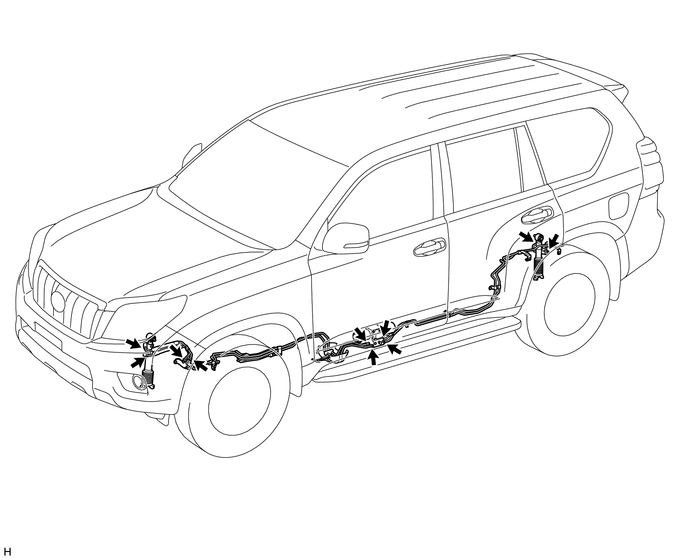
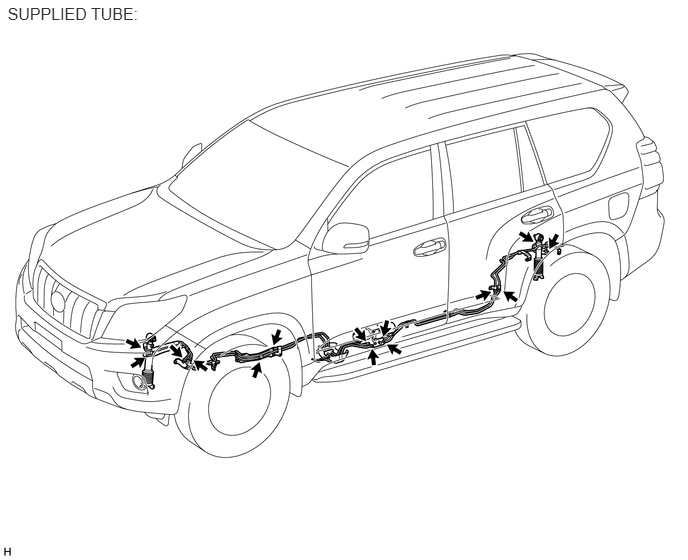
Check for fluid leakage from the parts and connections shown in the illustration.