PRECAUTION
Precautions · Vehicles built from Jan 2012
Versions by build date: Sep 2011 – Dec 2011 from Jan 2012
- CAUTION:
- Before working on the fuel system, disconnect the cable from the negative (-) battery terminal.
- Do not smoke or be near an open flame when working on the fuel system.
- Keep gasoline away from rubber and leather parts.
- Before working on the fuel system, disconnect the cable from the negative (-) battery terminal.
| 1.IGNITION SWITCH EXPRESSION |
The type of ignition switch used on this model differs depending on the specifications of the vehicle. The expressions listed in the table below are used in this section.
Expression
Ignition Switch (Position)
Engine Switch (Condition)
Ignition Switch off
LOCK
Off (Lock)
Ignition Switch ACC
ACC
On (ACC)
Ignition Switch ON
ON
On (IG)
Engine Start
START
On (Start)
| 2.DISCHARGE FUEL SYSTEM PRESSURE |
- CAUTION:
- Do not disconnect any part of the fuel system until you have discharged the fuel system pressure.
- After discharging the fuel pressure, place a cloth or equivalent over fittings as you separate them to reduce the risk of fuel spray on yourself or in the engine compartment.
- Do not disconnect any part of the fuel system until you have discharged the fuel system pressure.
Disconnect the fuel pump ECU connector (Click here).
Start the engine. After the engine has stopped on its own, turn the engine switch off.
- HINT:
- If DTC P0230 is output, clear the DTC (Click here).
Crank the engine, and then check that the engine does not start.
Loosen the fuel tank cap, and then discharge the pressure in the fuel tank completely.
Disconnect the cable from the negative (-) battery terminal.
- NOTICE:
- After turning the ignition switch off, waiting time may be required before disconnecting the cable from the battery terminal. Therefore, make sure to read the disconnecting the cable from the battery terminal notice before proceeding with work (Click here).
- When disconnecting the cable, some systems need to be initialized after the cable is reconnected (Click here).
- After turning the ignition switch off, waiting time may be required before disconnecting the cable from the battery terminal. Therefore, make sure to read the disconnecting the cable from the battery terminal notice before proceeding with work (Click here).
Connect the fuel pump ECU connector (Click here).
| 3.FUEL SYSTEM |
When disconnecting the high fuel pressure line, a large amount of gasoline will spill out. Follow these procedures.
Discharge the fuel system pressure.
Put a container under the connecting part of the pressure line.
Slowly loosen the connection.
Disconnect the connection.
Plug the connection with a rubber plug.
Observe these precautions when removing and installing the injectors.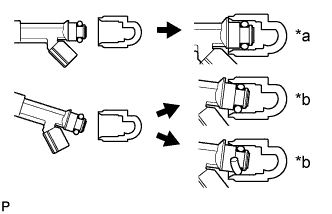

Text in Illustration *a
OK
*b
NG
Never reuse the O-ring.
When installing a new O-ring to the injector, do not damage it.
Coat new O-rings with spindle oil or gasoline before installing. Do not use engine oil, gear oil or brake oil.
Install the injector to the delivery pipe and lower intake manifold as shown in the illustration.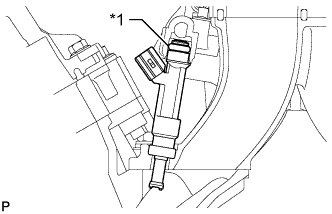
Text in Illustration *1
O-Ring
- NOTICE:
- Before installing the injector, be sure to apply spindle oil or gasoline to the place where the delivery pipe or cylinder head contacts the O-ring of the injector.
Observe these precautions when disconnecting the fuel tube connector (for quick type A).
Fuel Pipe Clamp Type: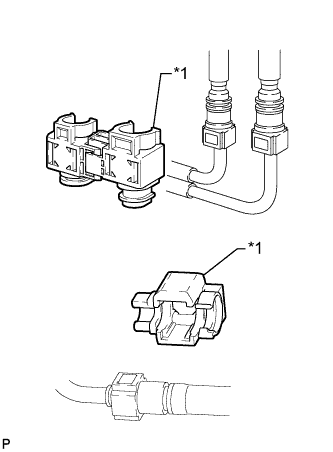
Remove the fuel pipe clamp from the fuel tube connector.Text in Illustration *1
Fuel Pipe Clamp
Fuel Hose Connector Cover Type: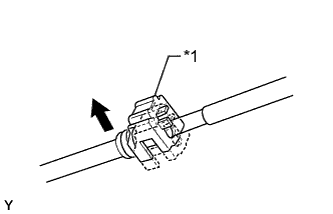
Detach the lock claw by lifting up the cover as shown in the illustration.Text in Illustration *1
Fuel Hose Connector Cover

Pull
Check for dirt or mud on the pipe and around the connector before disconnection. Clean if necessary.
Pinch the connector and disconnect the connector and pipe.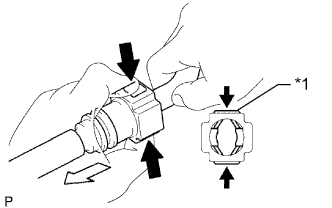
If the connector and the pipe are stuck together, pinch the connector, and then push and pull the pipe to disconnect the pipe and pull it out.Text in Illustration *1
Retainer
Pinch

Pull
- NOTICE:
- Do not use any tools in this procedure.
Check for dirt or mud on the seal surface of the disconnected pipe. Clean if necessary.
To protect the disconnected pipe and connector from damage and contamination, cover them with a plastic bag.
Observe these precautions when connecting the fuel tube connector (for quick type A).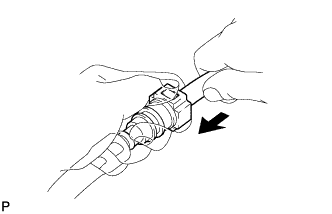
Check that there is no damage or contamination in the connected part of the pipe.
Text in Illustration
Push
Align the axis of the connector with the axis of the pipe. Push the pipe into the connector until the connector makes a "click" sound. If the connection is tight, apply a small amount of fresh spindle oil or gasoline on the tip of the pipe.
After having finished the connection, try to pull apart the pipe and the connector to confirm that they are securely connected.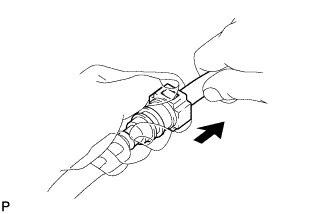
Text in Illustration
Pull
Fuel Hose Connector Cover Type:
Attach the lock claw to the connector by pushing down on the cover.Fuel Pipe Clamp Type:
Install the fuel pipe clamp to the connector.Check that there is no fuel leakage.
Observe these precautions when disconnecting the fuel tube connector (for quick type B).
Check that there is no damage or foreign matter on the part of the pipe that contacts the connector.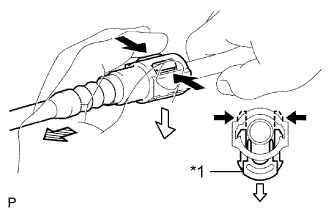
Text in Illustration *1
Retainer
Push
Down

Pull
Detach the 2 claws of the connector retainer. Push down on the connector and disconnect it from the pipe.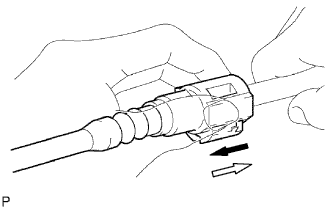
Text in Illustration
Pull
Push
- NOTICE:
- Do not use any tools in this procedure.
- HINT:
- If the connector and pipe are stuck, pinch the fuel pipe by hand, and push and pull the connector to disconnect it.
Check for foreign matter on the seal surface of the disconnected pipe. Clean it if necessary.
To protect the disconnected pipe and connector from damage and foreign matter, cover them with a plastic bag.
Observe these precautions when connecting the fuel tube connector (for quick type B).
Check for foreign matter on the pipe and around the connector before connecting it. Clean it if necessary.
Align the axis of the connector with the axis of the pipe. Push the pipe into the connector, and push up on the retainer.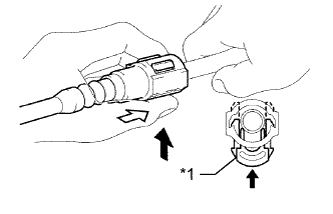
Text in Illustration *1
Retainer
Up
Push
After connecting the pipe and connector, try to pull them apart to confirm that they are securely connected.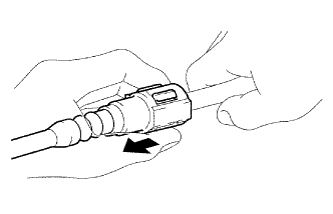
Text in Illustration
Pull
| 4.CHECK FOR FUEL LEAK |
Check that there are no fuel leaks after performing maintenance anywhere on the fuel system (Click here).